How to Make Your Brain Hungry for New Words

You didn't plan to learn the word for "spoon" today.
Then you stood over a bowl of soup and wondered: What's this called in the language I'm learning?
A second ago, it was just a spoon. Now there's something you want to know.
That moment gives you a useful starting point for learning a new word. Before asking how to remember the answer, give yourself a reason to want it.
Put the question before the word
A vocabulary list tells you which word comes next. Your own question gives you another way into it.
Picture yourself packing for a rainy day. You know exactly which object you need. Could you name it in the language you're learning? Or imagine cooking dinner and wanting to describe what is in your hand.
The question can be tiny: "What's that called?" You already understand the thing. You're curious about the name that goes with it.
You can create that opening during a lesson, too. Look at the object or action in an example and notice what you would like to name. Give yourself a moment to wonder before checking the word.
Which name do you want to find?
Choose one object whose Spanish name you're curious about. Take a moment to wonder, then open its answer. You don't need to guess correctly or know any Spanish to begin.

A spoon
Find its Spanish name
cuchara
Spanish for spoon.
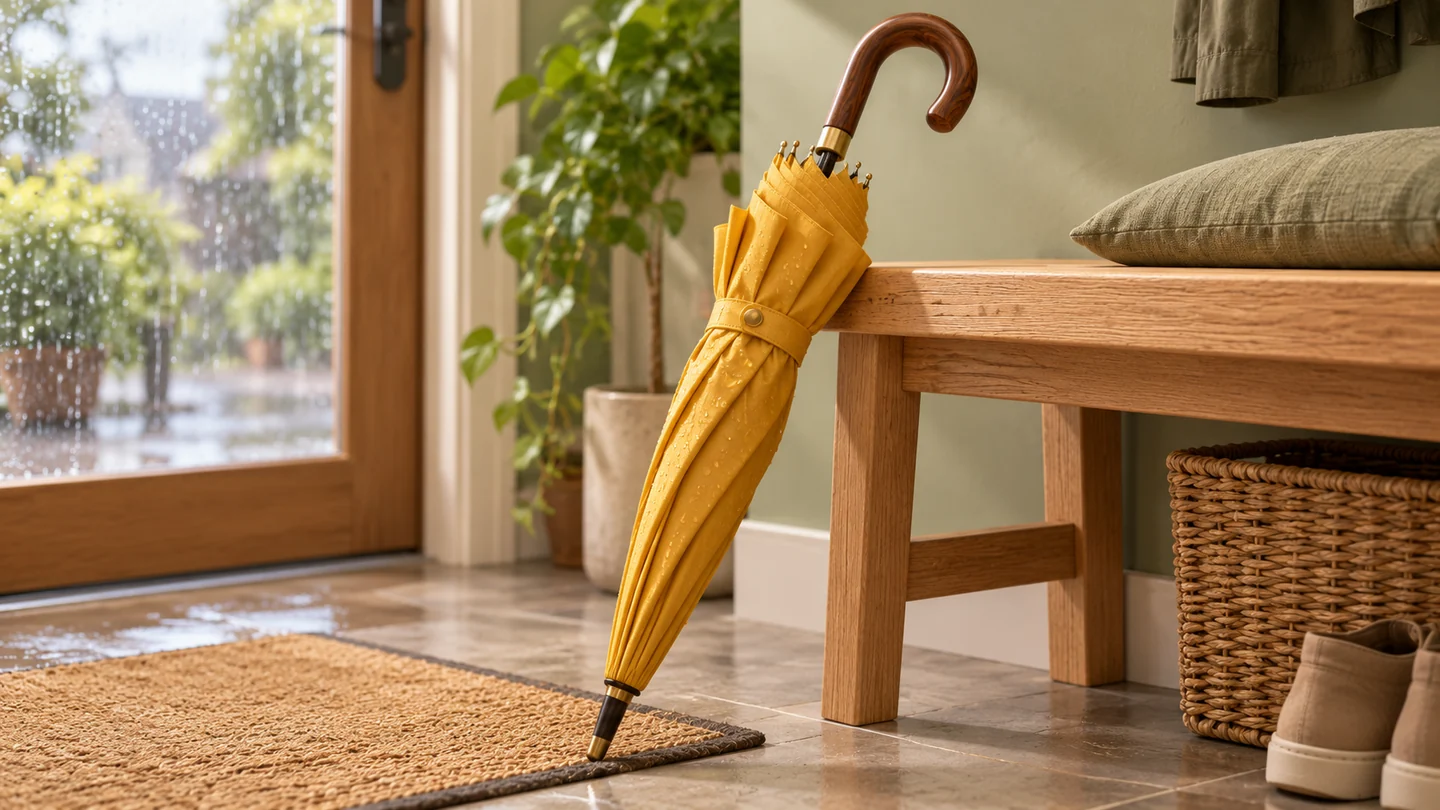
An umbrella
Find its Spanish name
paraguas
Spanish for umbrella.
If you opened one answer, you have a word attached to a question you chose. Look back at its picture and listen to the name if you like. Let the answer meet the thing you were wondering about.
Why wanting the answer matters
In a study by Matthias Gruber and colleagues, people rated how curious they were about answers to trivia questions. Later, they saw the questions and waited briefly before the answers appeared.
People remembered more answers to questions they had been highly curious about. A second experiment found that advantage on a test the following day, too.
The researchers studied trivia, so those results don't establish how much a vocabulary activity like this will help. They give us a reason to pay attention to something that happens before an answer arrives: the learner's interest in finding it.
For language learning, the practical idea is simple. Start with something you want to know, then discover the word that answers your question.
- WonderWhat would I like to name?
- FindCheck the word and its sound.
- UseGive the answer a familiar situation.
Let ordinary moments supply the questions
You can try this without setting aside a separate study session.
While making lunch, choose one thing you would like to name. While listening to a song, notice a word you want to understand. While planning an outing, think of something you would actually want to ask for.
Choose a manageable question with an answer you can check. A beginner can start with one concrete object. A reliable dictionary can supply its name, an English meaning, and often a pronunciation recording.
Let usefulness guide your choice, too. A word for something you handle every morning has another opportunity to appear tomorrow.

Give the answer somewhere to go
After you find a word, connect it with the thing that prompted your question. Look at the object, picture using it, or try a short thought with words you already know.
Curiosity can give a word an interesting beginning. Lasting learning still benefits from opportunities to remember and use it. When the object appears again, try bringing its name to mind, then check.
If you want help making that connection clear, our article about learning words in context develops that next step.
The videos in Bambolingua's beginner Spanish course introduce new words through visible situations. As you watch an example, notice which object or action you want to name. Bring a question to the scene as well as your attention.
Your next useful word could begin with something as ordinary as a spoon. Give yourself a moment to wonder what it's called.
Sources and further reading
- Gruber, M. J., Gelman, B. D., and Ranganath, C. (2014). States of curiosity modulate hippocampus-dependent learning via the dopaminergic circuit. Neuron, 84(2), 486-496.
- Real Academia Española and Asociación de Academias de la Lengua Española. Spanish dictionary entries for cuchara and paraguas.