Struggling With Grammar? The Problem Might Be Your Vocabulary.
The grammar explanation is only three lines long. You have already opened the dictionary four times.
By the time you get back to the rule, you have lost track of the example.
Is the grammar really the hardest part? Or are you trying to learn every word in the sentence at the same time?
When you begin a language, almost everything is unfamiliar. A small foundation of useful vocabulary gives you something to recognize before the next new thing arrives. Those words can turn up in a listening exercise, give you something to say, and make a grammar example easier to follow.
Make a few useful words familiar before asking a grammar rule to work with them. You can put that small foundation to use while it grows.
Give your next lesson something you already know
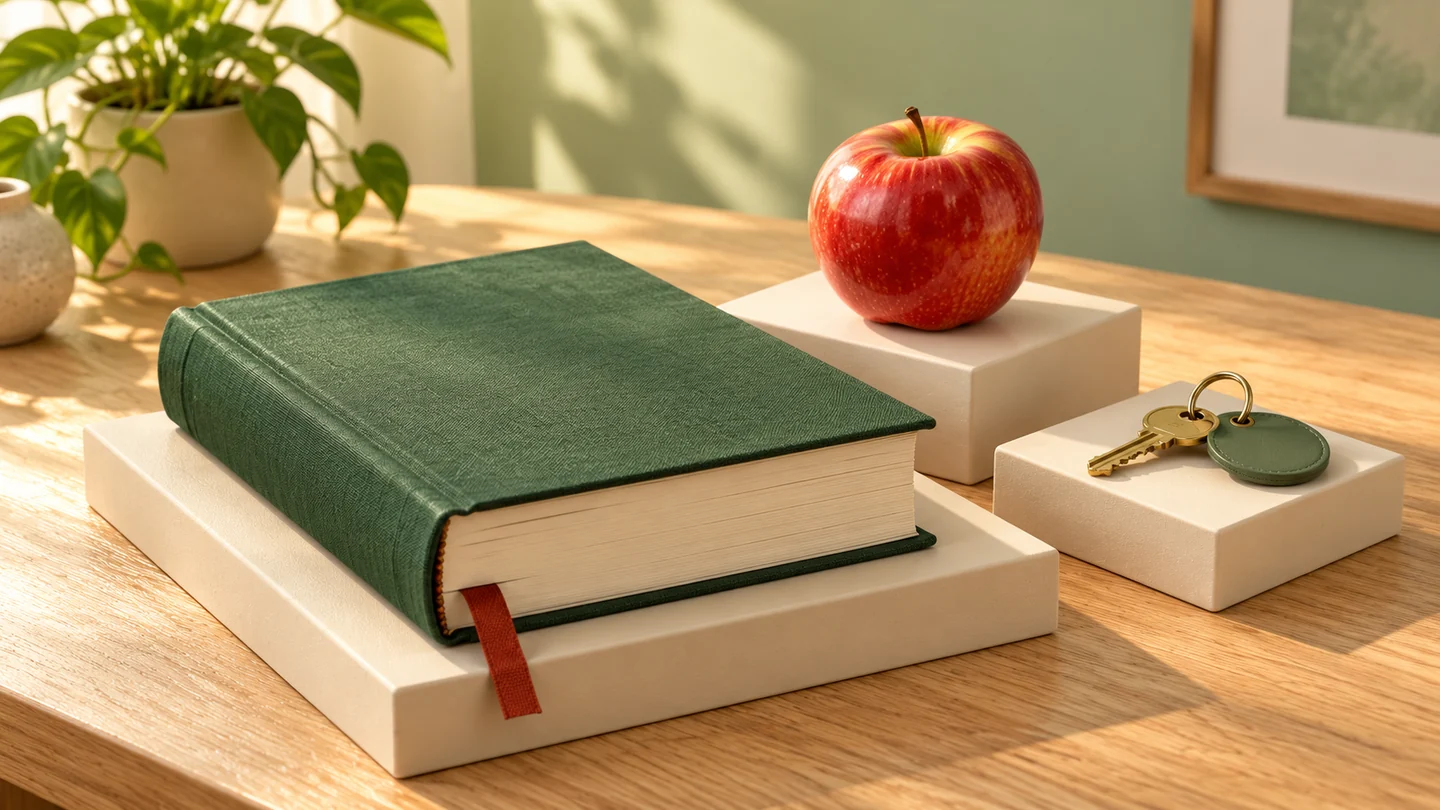
Start with a thing you can clearly recognize: a book.
In Spanish, libro means book.

Look at the object while you learn its name. Hear the word in your lesson, check the English meaning, and connect it with the book you could pick up and open.
Later, look away from the written word and try bringing it back. Check it if you need help. You are beginning to make one useful piece of the language familiar.
Our article about learning words in context explores that first connection. Here, consider what happens when a later lesson gives that familiar word a new job.
One word can help in several kinds of lesson
Suppose you have learned both the meaning and the sound of libro.
In a short recording, it is one word you can try to catch. You may still need help with the rest, but you have something specific to listen for.
In a study of English listening comprehension, researchers replaced different proportions of words in four spoken stories with invented words. Understanding generally improved when more of the vocabulary remained available. The research concerned understanding stories; it gives us a reason to take familiar vocabulary seriously when choosing what to listen to.
Speaking gives the word another job. At a bookshop, knowing libro gives you part of what you need to ask about a book. A pointing hand can help you explain which one. You can learn a fuller request as you go.

Reading offers another chance to recognize it. In research involving 661 learners across eight countries, knowing a larger proportion of the words in a passage was associated with better reading comprehension. Vocabulary was part of understanding, alongside the other knowledge readers brought to the text.
The same word can keep contributing as the task changes.
Listening
Recognize a word you have heard before.
Reading
Find a familiar meaning in the text.
Speaking
Name something you want to talk about.
Grammar
Build a pattern around a word you know.
Let grammar add one new piece
Now imagine a lesson introduces un. With libro, it means a: un libro means a book.
You already know what libro refers to. The lesson can focus on how the new piece fits beside it.
Compare that with an example in which the little word, the noun, and the thing being described are all unfamiliar. You would have several questions to answer before you could follow the pattern.
This is a useful way to approach early grammar: bring familiar vocabulary into a small new pattern, check the meaning of the whole phrase, and practise using it. Later, try that pattern with another suitable word you already know.
You can keep learning vocabulary while beginning short phrases. There is no need to finish a list of hundreds of words before combining any of them.
Choose first words you have a reason to meet again
Your starting vocabulary should have a place in the life you want to describe: things you use, ordinary actions, people, and everyday needs.
Choose a small amount you can give attention to. For each word, work on its meaning, its sound, and a situation where you could use it. A picture, a short scene, and an English explanation can help make that first encounter understandable.
Then leave room for returns. In a vocabulary experiment by Karpicke and Roediger, continuing to practise recall after an initial correct answer improved memory a week later compared with further study without recall practice.
Try bringing a familiar word back in a different ordinary situation. Here is one small opportunity with the word from earlier.

What is she reading?
What was the Spanish word meaning book?
Show the answer
Libro means book.
Build from the words you have
A small vocabulary becomes more useful when you keep giving it opportunities: recognize a word in a supported example, try saying it, and use it inside a phrase you understand.
Bambolingua's beginner Spanish course follows that progression. New words are introduced through videos, then short lessons introduce grammar with examples and practice using familiar vocabulary.
In your next lesson, notice which pieces already mean something to you. Use them as a place to begin. When the new pattern arrives, you have something to put inside it.
Sources and further reading
- van Zeeland, H., and Schmitt, N. (2013). Lexical Coverage in L1 and L2 Listening Comprehension: The Same or Different from Reading Comprehension? Applied Linguistics, 34(4), 457-479.
- Schmitt, N., Jiang, X., and Grabe, W. (2011). The Percentage of Words Known in a Text and Reading Comprehension. The Modern Language Journal, 95(1), 26-43.
- Karpicke, J. D., and Roediger, H. L., III (2008). The Critical Importance of Retrieval for Learning. Science, 319, 966-968.