
Why Flashcards Are a Bad Idea When Learning Languages
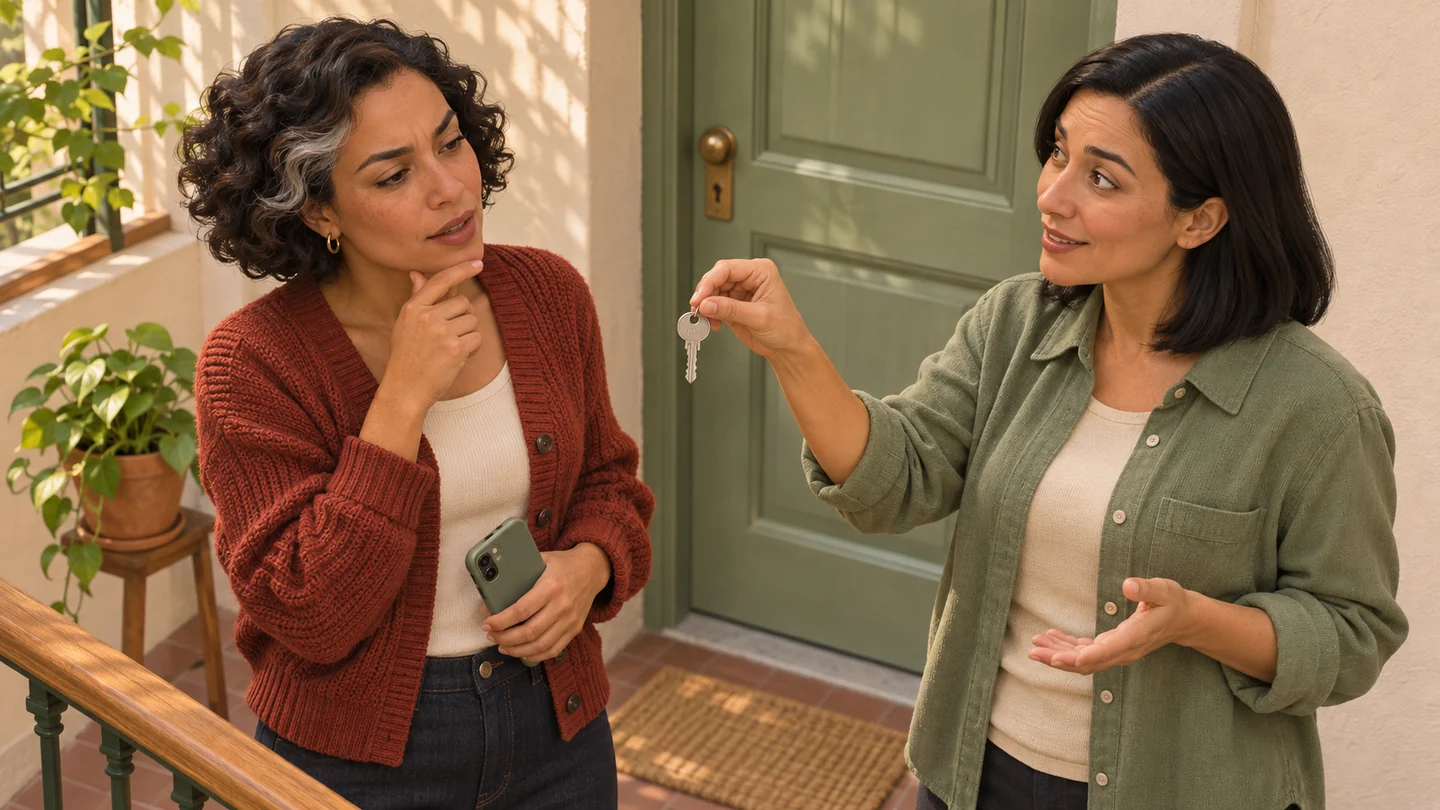
Every match was correct. Then you tried to speak, and the word wasn't there.
A moment ago, you could connect every Spanish word with its English meaning. Now you know what you want to say, but can't find the word.
The exercise gave you help that the conversation doesn't.
Here, we're looking at a familiar flashcard-style activity: English words in one column, foreign words in another, and instructions to match them. Relying on that alone is a poor plan for learning to use a language. Cards that hide the answer and ask you to recall it already add an important step.
The answer is already on the screen
Take one Spanish word: llave, meaning key, the kind you put in a door lock. That meaning appears in the RAE dictionary entry for llave.
In a matching exercise, you see llave alongside English choices such as key, bread, and phone. Something looks familiar, and you select key.
That is useful recognition. You have connected the written word with its meaning. But you haven't had to produce the Spanish word yourself.
Recognize the meaning
Show the answer
Llave means key.
Now imagine needing a key. The object or thought gives you the meaning. You have to find llave without a list supplying its letters.
Recognizing an answer and generating it are different demands. Your practice needs room for both.
The final match can practically make itself
Suppose an exercise contains five pairs. You confidently match four of them. Only one English word and one Spanish word remain.
You connect them and receive another correct mark. Yet you might have made that match simply because nothing else was left.
This doesn't make matching worthless. It means a completed screen can tell you less than you think about what you could recall independently.
- Matched
- Matched
- Matched
- Matched
Seeing a word and finding it yourself need different practice
Recognizing llave when it appears in front of you starts with the Spanish word. Remembering it because you need a key starts with the meaning.
You can be comfortable with one direction and still need practice with the other.
In a 2016 study by Tatsuya Nakata, 64 English-speaking college students learned Swahili-English word pairs using different recognition and recall formats. Recall formats were better for learning to produce correctly spelled words. Recognition formats were preferable when spelling wasn't required.
The finding gives us a useful question: what ability is this exercise helping you practice? A good matching score leaves the separate task of producing the word worth checking.
Give the word a door to open
Picture someone arriving home. They take a key from their pocket, put it into the lock, and turn it. The door opens.
The Spanish word for that key is llave.
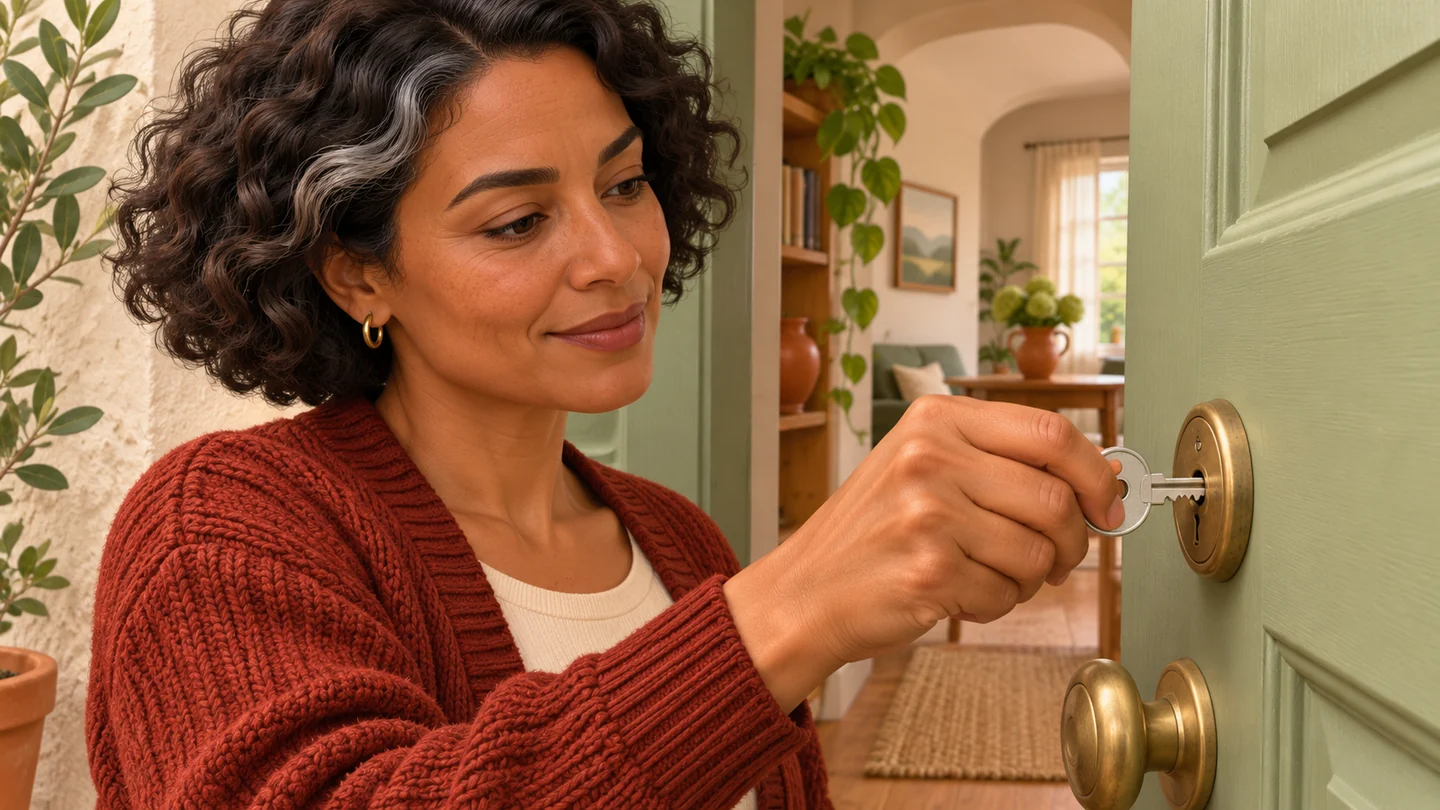
The English translation tells you the meaning. The scene gives you a person, an object, and a reason to use the word.
Later, picture your own key. Where do you keep it? Who might ask you for it? Give the word a place in a situation you already understand. Our article about learning words in context explores that connection further.
Then add a chance to remember the word while its written form is hidden.
Let the choices disappear for a moment
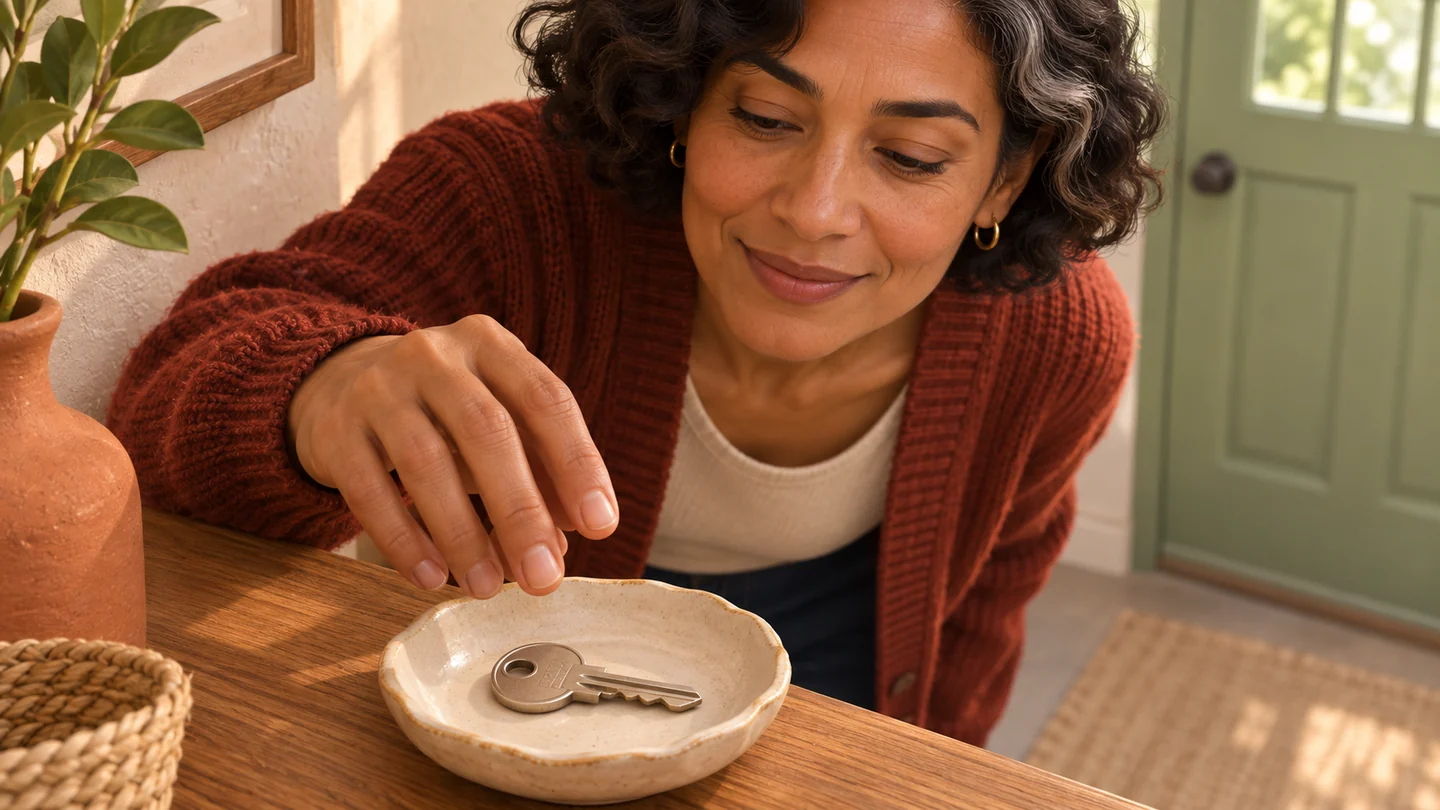
Imagine you're leaving home. Your hand reaches toward the little dish where you keep your key.
What was the Spanish word for that object?
Bring the word back
A small hint
It starts with ll.
Show the answer
Llave means key.
If it takes longer than matching, that doesn't automatically mean you're doing worse. You are now trying to supply the word yourself.
Check the answer when you need it. Getting stuck gives you something specific to return to; it isn't a reason to spend minutes staring at an empty box.
A correct answer deserves another turn
Even remembering a word once doesn't mean the job is finished.
In Karpicke and Roediger's vocabulary experiment, students learned Swahili-English pairs. After a pair was first recalled correctly, continuing to practice recall produced much better memory a week later than continuing to study the pair without further recall practice.
Word pairs were part of that successful learning. What mattered was what learners did with them after the first correct recall.
Give your own words another opportunity later. Try recalling llave when you pick up your key, look for it, or hand it to someone.
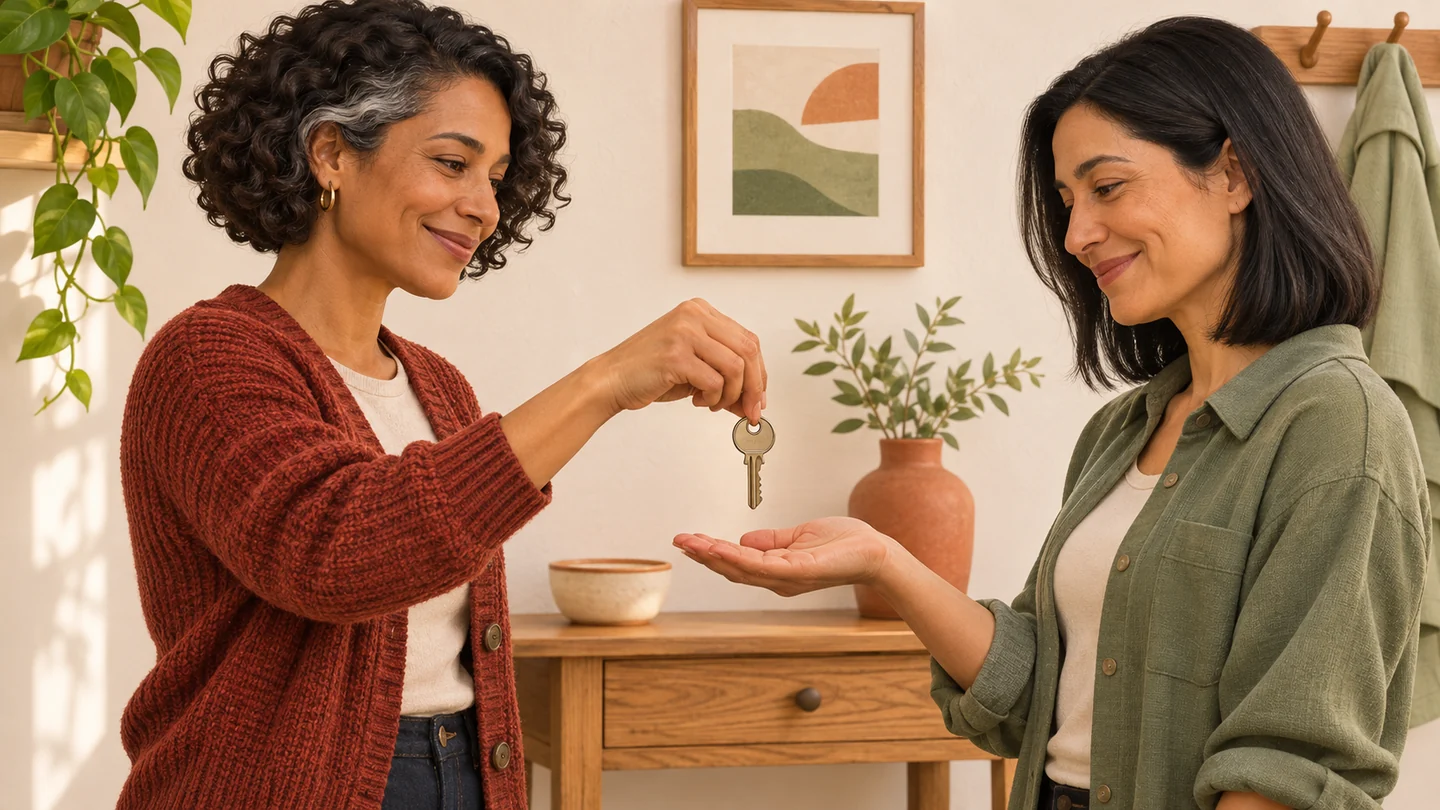
Matching can be an introduction. Follow it with chances to understand the word in a situation, recall it without choices, and check what you remembered.
Next time you finish a perfect matching round, close the choices. Picture something you want to say. See whether you can bring the word with you.
Sources and further reading
- Nakata, T. (2016). Effects of retrieval formats on second language vocabulary learning. International Review of Applied Linguistics in Language Teaching, 54(3), 257-289.
- Karpicke, J. D., and Roediger, H. L., III. (2008). The Critical Importance of Retrieval for Learning. Science, 319(5865), 966-968.
- Real Academia Española and Asociación de Academias de la Lengua Española. Llave. Diccionario de la lengua española, door-key meaning.